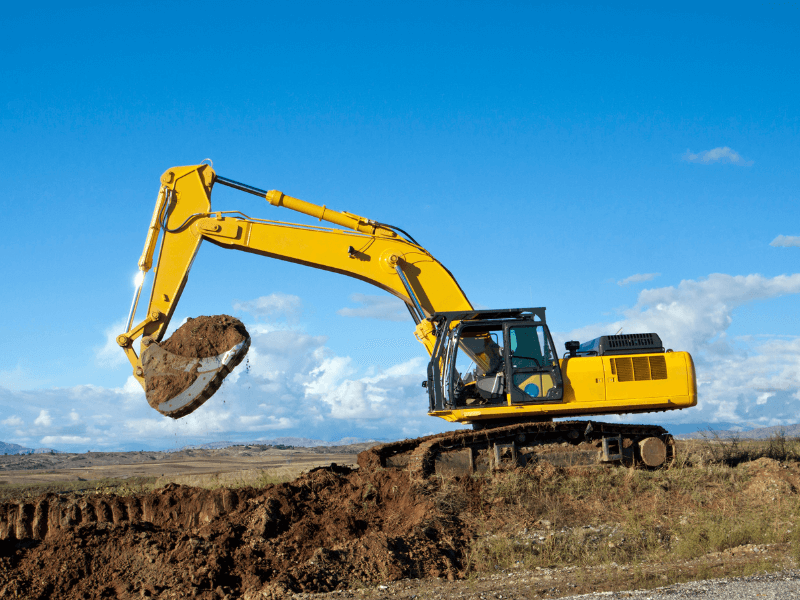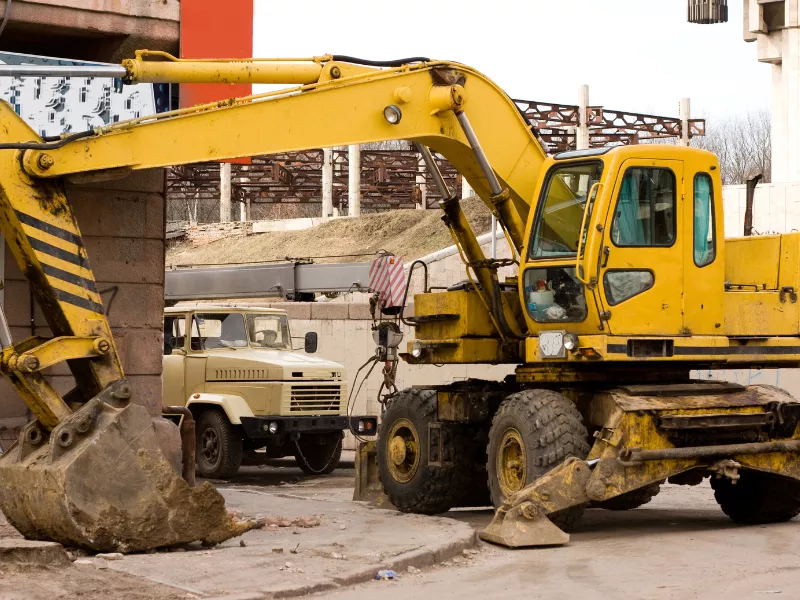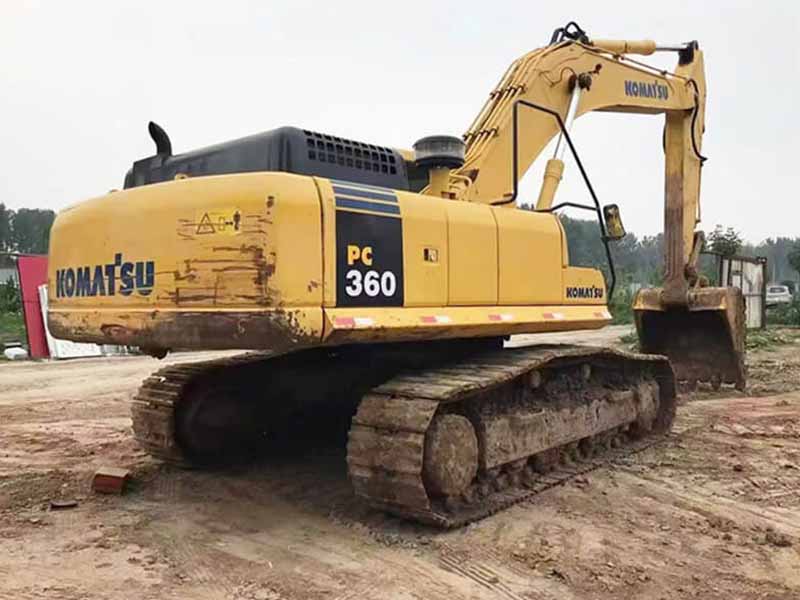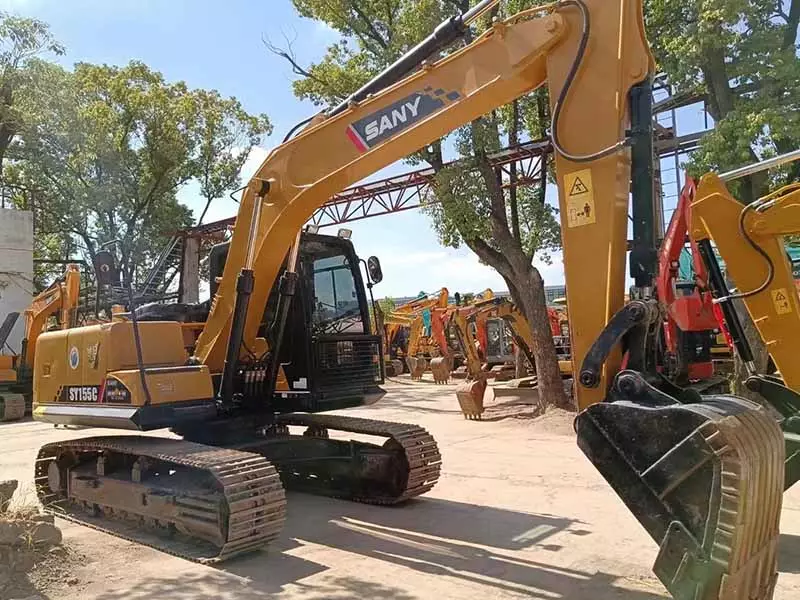
The machine’s capabilities must be matched to the particular requirements of the job. For this decision-making process, an accurate excavator sizes chart is important information. It makes it possible to compare important metrics directly. Engineers can evaluate power. On the job site, this analysis guarantees peak performance, safety, and efficiency. In this article, Yonggong will help you choose the right one for you .

Types of Excavators and Their Uses
A standardized framework for comprehending the capabilities of an excavator is provided by weight classification. These classes directly determine the machine’s application potential.
Mini Excavators (less than 7 metric tons): These machines are excellent in small urban or residential spaces. They can be easily transported on regular trailers due to their low weight. One major benefit for projects on soft soil or finished surfaces is the minimal amount of ground disturbance. Applications include landscape grading, demolition, and small-scale trenching.
The most popular range for general construction is standard excavators. This class of machines provides a flexible mix of size and power. They are therefore capable of handling heavy material loading and foundation excavation. Stability and lifting capacity are affected by weight in this class.
Excavators that weigh more than 45 metric tons are only used in high-production settings. Their significant weight offers the stability required for moving large amounts of material and conducting deep excavations. One of the most important logistical factors is transporting these machines. Heavy-duty equipment and special permits are frequently needed.
Specifications for Excavators: Important Factors to Take Into Account
Beyond just weight class, engineers need to examine a number of key performance indicators. A machine’s suitability for its intended use is determined by these specifications.
The base machine, operator, and full fluid levels are all included in the operating weight metric. It serves as the main gauge of the machine’s stability and size.
Dig Depth: This indicates how far below ground level the bucket can go vertically. You must choose a machine that can reach the necessary trench or foundation depth without moving.
The highest point at which the bucket can efficiently release its load is known as the dump height. The dump height needs to be high enough to clear the sides of any on-site hoppers or dump trucks.
Engine Power: The hydraulic system’s operation is determined by engine power. Faster cycle times and higher breakout force are typically associated with higher power.
Tailswing and Width: During rotation, Models with zero or minimal tailswing are necessary when operating in traffic or close to walls. The width of the machine determines whether it can operate in tight spaces or through gates.
A Detailed Comparison of Excavator Size Charts
A direct comparison of models is a necessary part of a successful selection process. For your technical assessment, use this excavator sizes chart to reference important specifications from top manufacturers.
| Model | Manufacturer | Operating Weight (lbs) | Max Dig Depth | Engine Power (hp) | Width | Tailswing Type |
| 301.7 CR | Caterpillar | 4,222 | 7 ft 9 in | 21 | 39 in | Compact Radius |
| U17 | Kubota | 3,693 | 7 ft 7 in | 16.1 | 39 in | Zero |
| E26 | Bobcat | 6,489 | 9 ft 6 in | 24.8 | 61 in | Minimal |
| CX37C | CASE | 8,350 | 11 ft 3 in | 24.4 | 69 in | Zero |
| 30 P-Tier | John Deere | 7,220 | 9 ft 2 in | 23 | 69 in | Reduced |
| 306 CR | Caterpillar | 15,766 | 12 ft 2 in | 55.9 | 78 in | Compact Radius |
| KX057-5 | Kubota | 12,346 | 12 ft 9 in | 47.6 | 77 in | Conventional |
| E60 | Bobcat | 12,646 | 14 ft 10 in | 55 | 77.2 in | Conventional |
| PC78US-11 | Komatsu | 18,188 | 15 ft 3 in | 68 | 91 in | Reduced |
| 315 | Caterpillar | 35,700 | 19 ft 8 in | 110 | 102 in | Standard |
| PC130-11 | Komatsu | 29,101 | 18 ft 2 in | 102 | 102 in | Standard |
| 320 | Caterpillar | 49,600 | 22 ft 1 in | 172 | 117 in | Standard |
| PC210LC-11 | Komatsu | 52,228 | 21 ft 8 in | 165 | 118 in | Standard |
| 336 | Caterpillar | 75,100 | 26 ft 11 in | 311 | 125 in | Standard |
| PC360LC-11 | Komatsu | 80,634 | 24 ft 3 in | 257 | 125 in | Standard |
| 349 | Caterpillar | 111,100 | 25 ft 1 in | 425 | 132 in | Standard |
| 395 | Caterpillar | 207,900 | 32 ft 4 in | 542 | 156 in | Standard |
| PC800LC-8 | Komatsu | 179,024 | 31 ft 2 in | 487 | 154 in | Standard |
Related reading: 13-ton excavator head-to-head — specs, hydraulic performance, real-world pricing and maintenance costs compared side by side.
Selecting the Appropriate Excavator for Your Task
Choosing the right excavator requires a methodical approach. Beyond a straightforward excavator sizes chart, this choice has implications. You must combine project variables and machine data.
You must first assess the site’s conditions and terrain. Ground stability determines whether you need a heavier machine for stability on uneven terrain or a lighter machine to prevent damage. Additionally, the general site layout determines restrictions on machine width and tailswing.
Next, carefully examine the project requirements. Establish the maximum depth at which trenches and foundations must be dug. Determine the lift height and capacity required for placing structures or loading materials. A machine that is too small will be dangerous and ineffective. An oversized machine, on the other hand, results in needless operating and transportation expenses.
Lastly, think about the practical aspects. The size of the machine greatly increases the cost of storage and transportation. You need to include these costs in the overall project budget. The availability of suitable trailers and permits can also influence the practical size limit for a particular project or company fleet.

Commonly Asked Questions
Which excavator size is the smallest?
The smallest class of excavators are mini excavators, also known as compact excavators. They usually begin with operating weights of about 2,000 pounds (0.9 metric tons). Manufacturers design these devices specifically for tasks in confined spaces where larger machinery cannot operate.
Which specifications are most important to compare?
Operating weight, maximum dig depth, maximum dump height, engine power, and machine width are the most important parameters to compare. Additionally, for jobs in confined spaces, the tailswing configuration—conventional, reduced, or zero—is important.
Can heavy-duty tasks be performed by mini excavators?
No, light-to-medium-duty jobs are the scope of mini excavators. They are great for indoor demolition. Large or standard excavators must have the strength and stability to perform heavy-duty tasks like mass excavation or heavy lifting.
What distinguishes standard excavators from mini excavators?
Size and power are the main differences. Compact and lightweight (less than 7 metric tons), mini excavators are easy to maneuver. Conventional excavators are more powerful and heavier. For larger construction projects, they therefore provide increased lifting capacity, reach, and digging depth.
Follow Us On YouTube.
Related Posts:
Kubota Excavator Sizes: Which One Fits Your Needs?