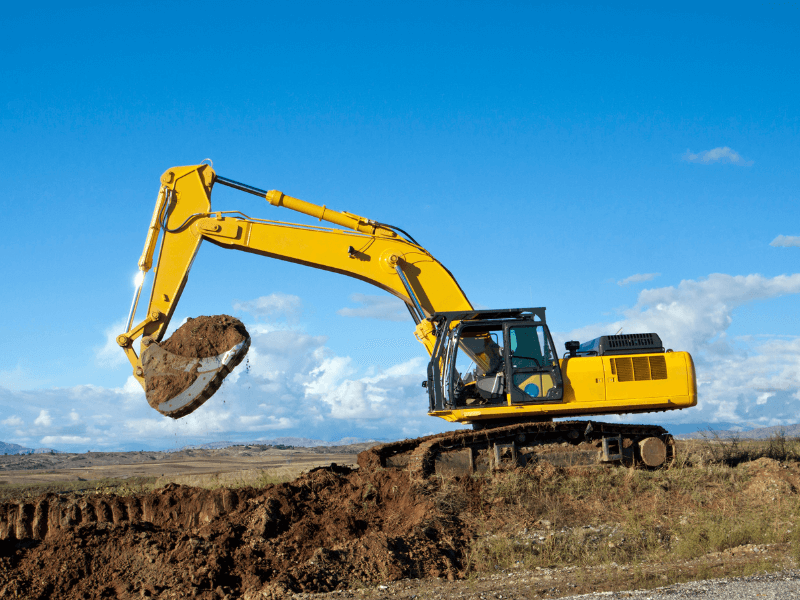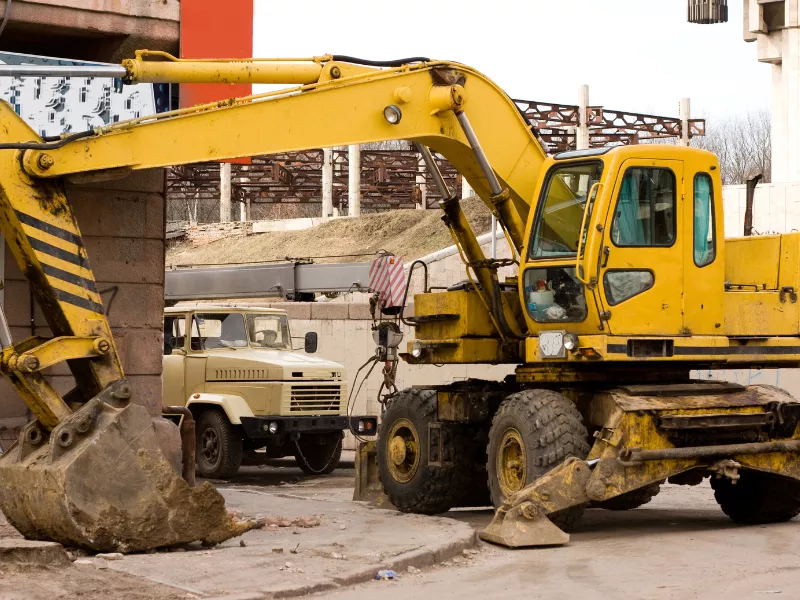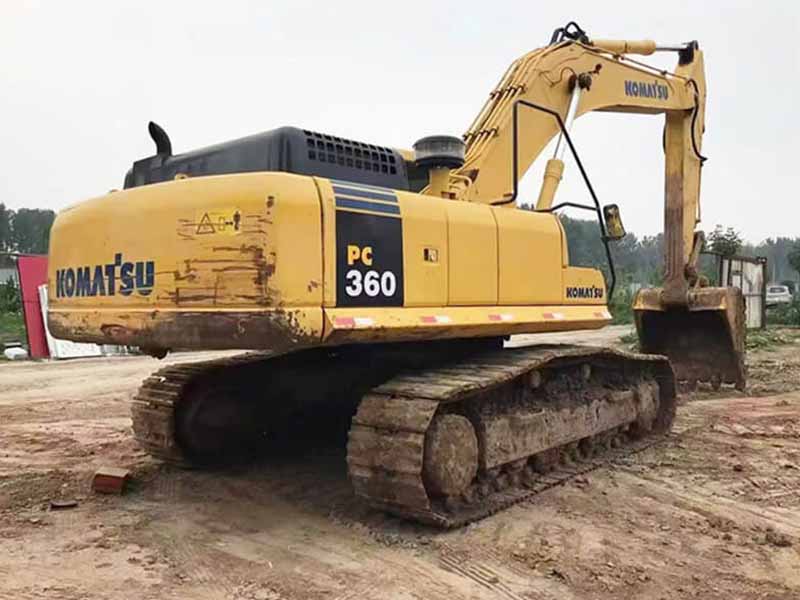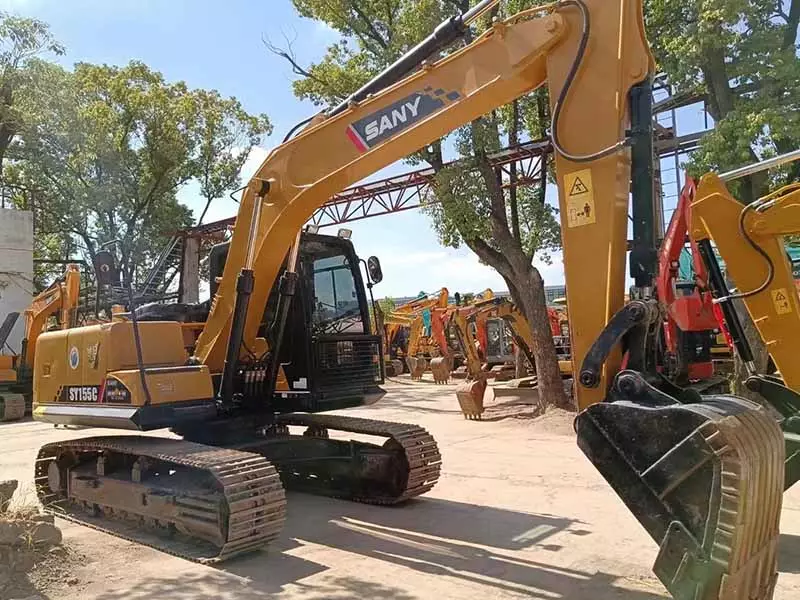
Choosing the right 30-ton excavator shapes your project’s profitability for years. Both the Doosan DX300LC and CAT 330D deliver serious digging power. However, they target very different job-site priorities. This guide breaks down specs, fuel costs, ROI, and rock durability — so you can buy with confidence. Browse our full range of 30-ton excavators for sale to compare current inventory.

Direct Answer for Earthmoving Contractors & Mine Managers
Choose the CAT 330D for hard-rock quarrying, granite demolition, and continuous heavy-breaker operations. Its 33,400 kg operating weight, 8.8-liter Cat C9 ACERT engine (200 kW), and reinforced box-section boom handle extreme structural stress far better. Choose the Doosan DX300LC for bulk earthmoving, fleet truck loading, and faster ROI. Its 29,600 kg frame, 7.6-liter DL08 engine, and 20–25% lower purchase cost allow contractors to recover capital 10–14 months sooner.
Technical Specification: DX300LC vs. CAT 330D
| Specification | Doosan DX300LC | CAT 330D |
|---|---|---|
| Operating Weight | 29,600 kg | 33,400 kg |
| Engine | Doosan DL08 7.6L | Cat C9 ACERT 8.8L |
| Net Power | 151 kW (202 hp) | 200 kW (268 hp) |
| Hydraulic Flow | 2 × 247 L/min | 2 × 280 L/min |
| Main Relief Pressure | 34.3 MPa | 35.0 MPa |
| Bucket Breakout Force | 196 kN | 205 kN |
| Standard Bucket Capacity | 1.25–1.50 m³ | 1.40–1.80 m³ |

The CAT 330D clearly leads on raw power and hydraulic pressure. Nevertheless, the Doosan matches well for standard soil and aggregate applications.
Heavy Chassis Weight & Counterweight Leverage
The CAT 330D outweighs the Doosan by nearly 3.8 tons. Consequently, when operators mount a 1.6 m³ rock bucket, the CAT’s counterweight keeps the front end planted on slopes. The Doosan, however, remains stable enough for most soil-stripping tasks. For a broader look at the Doosan heavy crawler lineup, see our Doosan crawler excavators guide.
Heavy Rock Breaker Rigidity vs. Bulk Earthmoving Speed
CAT 330D: Built for Granite & Severe Demolition
The CAT 330D excels in the toughest conditions. Its reinforced X-frame undercarriage absorbs severe 175 mm breaker recoil without transmitting fatigue into the main frame welds. Furthermore, the cast-steel boom sections resist cracking during years of daily quarry work. The C9 ACERT engine also tolerates poor-quality, high-sulfur diesel common in remote African and Central Asian mine sites. For full torque and pressure data, review the CAT 330D specs guide. Ready to buy? Check out a certified used CAT 330D excavator currently in stock.
Doosan DX300LC: Smooth Hydraulics & Fleet Bulk Loading
The Doosan DX300LC shines in high-volume truck-loading cycles. Its e-EPOS electronic power optimization system pairs with dual tandem piston pumps. Together, they deliver faster, smoother bucket cycles in soft soil and sand applications. As a result, fleet operators consistently report higher hourly tonnage in bulk earthmoving. The modern evolution of this platform is the Doosan DH300LC-7 excavator model, which builds on the same hydraulic DNA.
Fuel Economy, Maintenance & ROI Amortization
Fuel cost is where the Doosan earns its reputation. In standard digging mode, the DX300LC burns roughly 20.5 L/hr versus 23.5 L/hr for the CAT 330D. During continuous breaker mode, consumption rises to 25.8 L/hr and 28.5 L/hr respectively. Therefore, over 2,000 annual working hours, Doosan operators save approximately $5,700–6,500 in diesel costs alone. In addition, Doosan consumables and filter kits cost 25–30% less than equivalent CAT parts — a meaningful advantage for budget-conscious fleet managers.

Pricing & Depreciation (2026 Index)
| Machine Hours | Doosan DX300LC / DH300 | CAT 330D |
|---|---|---|
| ~4,000 hrs (low use) | $55,000–68,000 | $68,000–82,000 |
| ~7,000 hrs (mid-life) | $42,000–55,000 | $55,000–72,000 |
| 10,000+ hrs (high use) | $28,000–38,000 | $40,000–52,000 |
The upfront savings gap reaches $13,000–17,000 at mid-life. Moreover, Doosan units move quickly in Southeast Asian, Middle Eastern, and Central Asian markets. CAT units, on the other hand, command strong resale premiums in African and South American mining fleets.
Guide to Final Procurement Decisions
Choose the CAT 330D when:
- Your site involves hard-rock quarrying or granite demolition
- You run a heavy hydraulic breaker daily or near-daily
- Your fuel supply uses low-grade diesel in remote locations
- Structural fatigue durability over 10,000+ hours matters most
Choose the Doosan DX300LC / DH300 when:
- You focus on bulk soil, sand, or aggregate loading cycles
- Capital recovery speed (ROI) is a primary decision factor
- Lower daily fuel and maintenance costs drive your margins
- You operate in markets with strong Doosan parts networks

Frequently Asked Questions
Q1: Which 30-ton excavator provides a faster ROI: Doosan DX300LC or CAT 330D? The Doosan DX300LC delivers faster ROI for general earthmoving. Its purchase cost runs 20–25% lower than the CAT 330D. It also burns 2.5–3.0 fewer liters per hour. As a result, contractors recover capital 10–14 months sooner on typical projects.
Q2: Can the Doosan DX300LC handle continuous heavy rock breaker operations? The DX300LC can run a hydraulic breaker. However, the CAT 330D handles continuous quarry breaking far better. Its heavier 33,400 kg frame and reinforced boom better absorb severe recoil vibrations over long daily shifts.
Q3: What are the main engine differences between these two machines? The CAT 330D uses an 8.8-liter Cat C9 ACERT engine producing 200 kW (268 hp). It delivers high-torque rock prying force. The Doosan DX300LC uses a 7.6-liter DL08 engine producing 151 kW (202 hp), optimized for fuel efficiency and smooth digging cycles.
Q4: How much fuel does the Doosan DX300LC save versus the CAT 330D? In standard earthmoving, the Doosan burns roughly 20.5 L/hr versus 23.5 L/hr for the CAT. That saves about 3.0 liters per hour. Over 2,000 annual hours, the savings total approximately $5,700–6,500.
Q5: What is the typical used-market price gap between these two models? At mid-life (5,000–6,000 hours), a used Doosan DX300LC or DH300 sells for $42,000–55,000. A comparable CAT 330D fetches $55,000–72,000. That creates an upfront savings gap of $13,000–17,000 in favor of the Doosan.