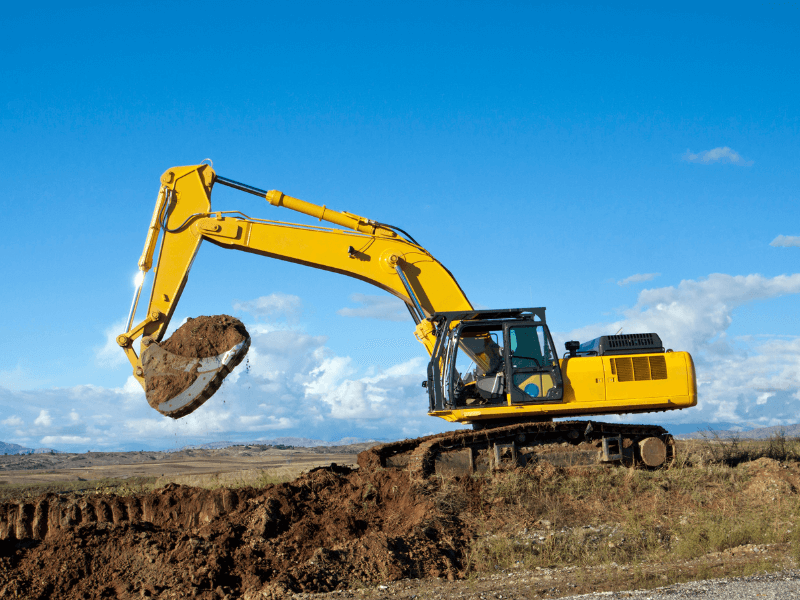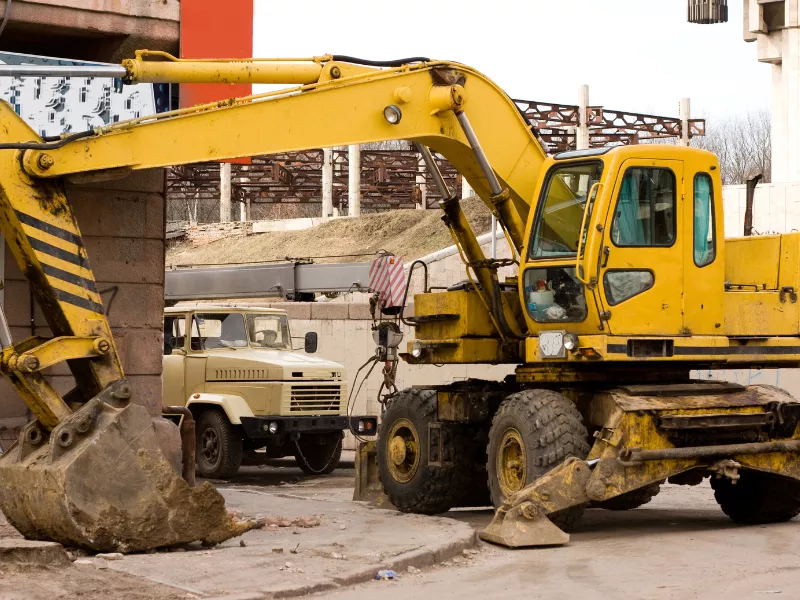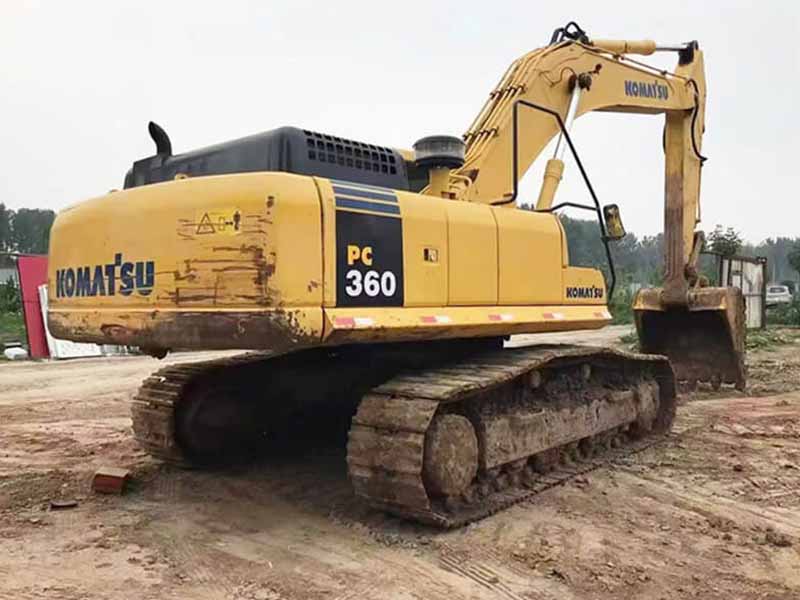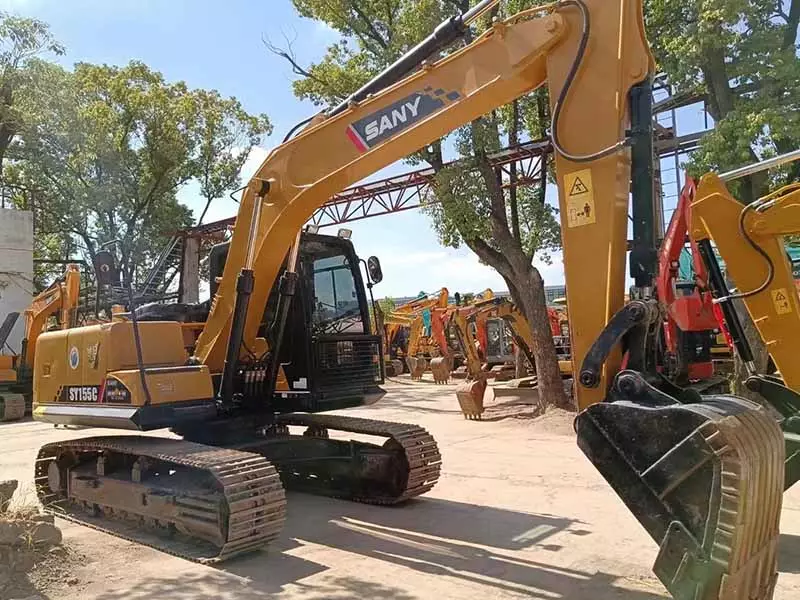
Choosing between these two heavyweights depends on one core question: do you need raw crushing dominance or fuel-efficient truck-loading economics? The CAT 349E leads in unblasted hard-rock prying. Its 317 kW C13 engine and 289 kN breakout force are simply unmatched. However, the Komatsu PC450-7 wins on fuel savings, lighter transport weight, and proven mechanical durability. Both machines handle heavy quarry work well. Yet they clearly excel in different operational scenarios. Fleet managers covering multiple tonnage classes should also explore 30-ton excavators for sale for lighter site assignments alongside these heavyweights.

Technical Specification Matrix: CAT 349E vs. Komatsu PC450-7
| Specification | CAT 349E | Komatsu PC450-7 |
|---|---|---|
| Operating Weight | 49,800–53,000 kg | 44,500–45,200 kg |
| Engine Model | Cat C13 ACERT | Komatsu SAA6D125E |
| Rated Power | 317 kW (425 hp) | 246 kW (330 hp) |
| Main Pump Flow | 2 × 380 L/min | 2 × 345 L/min |
| Relief Pressure | 35.0 MPa | 34.3 MPa |
| Bucket Breakout Force | 289 kN | 256 kN |
| Standard Bucket Capacity | 2.2–2.8 m³ | 1.9–2.3 m³ |
| Undercarriage Width | 3,590–4,100 mm | 3,340–3,490 mm |
Weight Class & Ballast Advantage
The CAT 349E carries roughly five tonnes more machine weight than the PC450-7. Consequently, this extra mass delivers critical ground-pressing force on dense basalt and granite formations. The heavier counterweight also eliminates tail-lift risk during aggressive breaker hammer cycles. Additionally, the massive box-section boom resists torsional cracking under sustained impact loading. For a complete overview of the CAT heavy-machine lineup by tonnage class, visit the CAT excavator sizes guide before finalizing your fleet configuration.
Hard Rock Prying vs. Agile Overburden Truck Loading

CAT 349E: 317 kW Cat C13 Torque & Heavy Breaker Hammer Absorption
The CAT 349E truly dominates in extreme hard-rock conditions. First, its reinforced cast-pivot boom absorbs violent recoil from 200 mm-class hydraulic breakers without structural fatigue. Second, the wider variable-gauge undercarriage prevents chassis bounce on uneven quarry benches. Third, the 35.0 MPa hydraulic relief pressure ensures consistent downward bite into unblasted rock veins. Contractors working incompletely blasted granite formations should seriously consider the used CAT 349E excavator for maximum machine stability and penetration force.

Komatsu PC450-7: CLSS Fast Swing Cycling & Simplified Mechanical Durability
In contrast, the Komatsu PC450-7 excels in high-volume blasted-rock loading operations. Its 9.1 rpm swing speed maintains a smooth, rhythmic loading pace alongside 40–50-tonne haul trucks. Furthermore, the mature SAA6D125E engine and proven CLSS hydraulics consistently deliver low electrical fault rates across long shift cycles. Teams seeking the used Komatsu PC450-7 excavator gain reliable long-term mechanical durability at a lower operating cost. For a deeper look at the PC450 series’ mining heritage, the Komatsu mining excavators guide covers the full engineering lineage.

Severe Quarry Fuel Consumption & Operating Economics
Fuel cost typically represents the single largest operating expense in heavy quarry work. In blasted-rock truck-loading cycles, the PC450-7 consumes approximately 34.5 L/h. By comparison, the CAT 349E burns roughly 42.0 L/h under identical conditions. During sustained heavy breaker work, the gap widens further — 38.5 L/h versus 46.5 L/h respectively.
Over 3,000 annual working hours, this 7.5 L/h difference saves approximately $18,000–22,500 in annual diesel expenditure. Moreover, the PC450-7’s lower operating weight simplifies multi-region transport significantly. The CAT 349E frequently requires counterweight removal and track-frame disassembly for legal road movement. As a result, every mobilization between quarry sites adds time and logistics cost to the CAT’s total ownership equation.

Secondary Market Valuation & Resale Pricing
| Machine Condition | CAT 349E | Komatsu PC450-7 |
|---|---|---|
| ~5,500 hrs (Premium) | $118,000–135,000 | $90,000–108,000 |
| ~9,000 hrs (Standard) | $92,000–125,000 | $75,000–98,000 |
| 12,500+ hrs (High Hours) | $55,000–72,000 | $48,000–63,000 |
At mid-life condition (6,500–8,000 hours), the CAT 349E commands a premium of roughly $17,000–27,000 above a comparable PC450-7. This premium reflects the CAT’s global hard-currency status in major mining regions. Meanwhile, the PC450-7 moves faster in Central Asia, Africa, and Latin American infrastructure markets, thanks to its lower acquisition price and excellent fuel efficiency reputation.
Final Procurement Decision Checklist
Choose the CAT 349E when:
- Breaker hammer work exceeds 40% of total operating hours
- Rock formations remain incompletely blasted and demand direct downward prying force
- Maximum machine weight and structural rigidity are non-negotiable site requirements
- You prioritize top-tier global secondary-market resale value as a hard asset
Choose the Komatsu PC450-7 when:
- Operations involve primarily pre-blasted rock with high-volume truck-loading cycles
- Diesel budgets are tight and fuel economy directly drives TCO decisions
- Bridge load limits or permit regulations make sub-45-tonne transport weight essential
- Your team demands minimal electrical downtime with proven, classic mechanical durability
FAQ
Q1: Which machine delivers greater rock breakout force — the CAT 349E or the Komatsu PC450-7?
— The CAT 349E delivers significantly greater breakout force. Its 317 kW Cat C13 engine and 35.0 MPa hydraulic relief pressure generate 289 kN of bucket breakout force. The PC450-7 produces 256 kN by comparison. Therefore, the CAT clearly dominates in prying embedded rock strata and unblasted hard formations.
Q2: How much fuel does the Komatsu PC450-7 save versus the CAT 349E in quarry operations?
— In heavy truck-loading applications, the PC450-7 consumes about 34.5 L/h against the CAT’s 42.0 L/h. Over 3,000 annual working hours, this 7.5 L/h gap saves roughly $18,000–22,500 in diesel expenditure annually.
Q3: What transport advantages does the PC450-7 offer over the CAT 349E?
— The PC450-7 weighs approximately 44,500 kg with a 3.49 m undercarriage width. This makes it 5–7 tonnes lighter than a fully ballasted CAT 349E. Consequently, lowboy trailer mobilization runs faster and oversize road permit costs drop considerably.
Q4: Is the CAT 349E better suited for running 200 mm hydraulic breaker hammers?
— Yes. The CAT 349E’s heavier counterweight, reinforced cast boom pivot, and wide variable-gauge undercarriage absorb massive breaker recoil effectively. This design prevents chassis bounce and long-term weld fatigue during sustained hammer operation.
Q5: What is the typical secondary-market price gap between these two machines?
— At mid-life condition (6,500–8,000 hours), a used CAT 349E typically trades between $92,000 and $125,000. A comparable PC450-7 usually sells for $75,000–98,000. This represents an initial acquisition saving of $17,000–$27,000 in favor of the Komatsu.