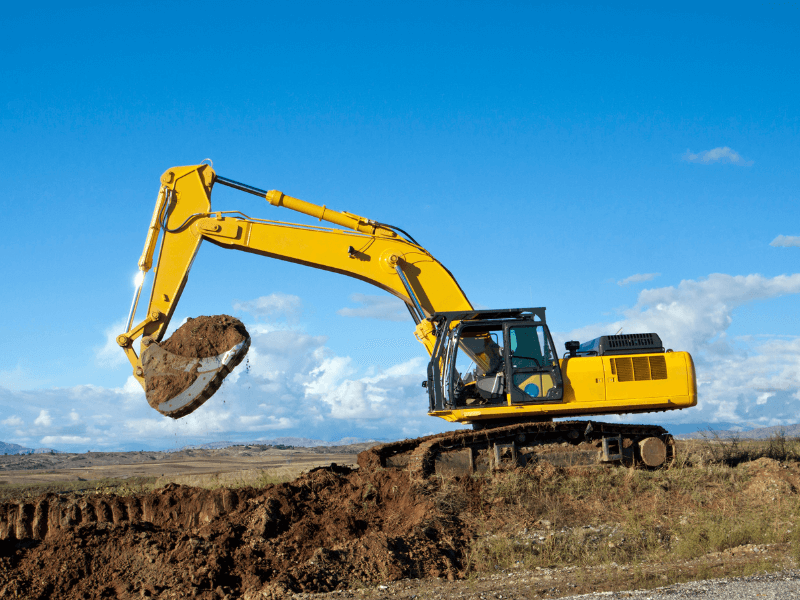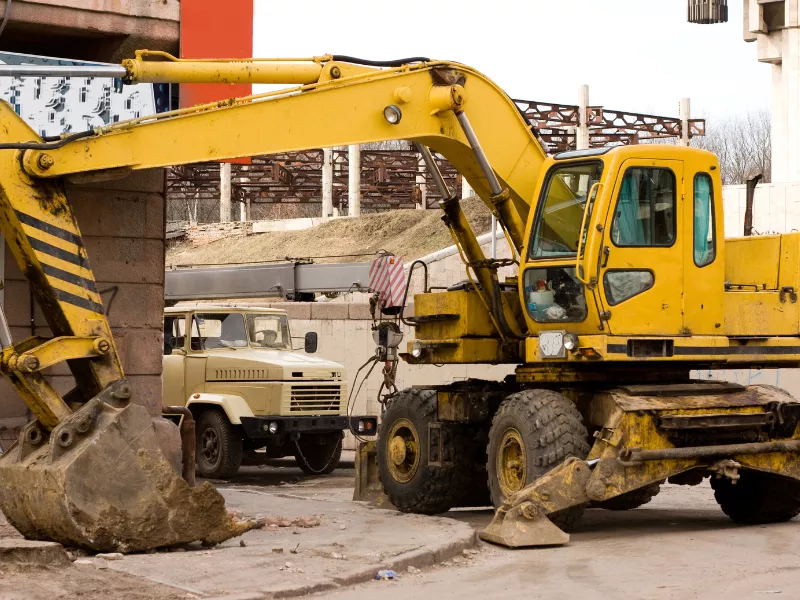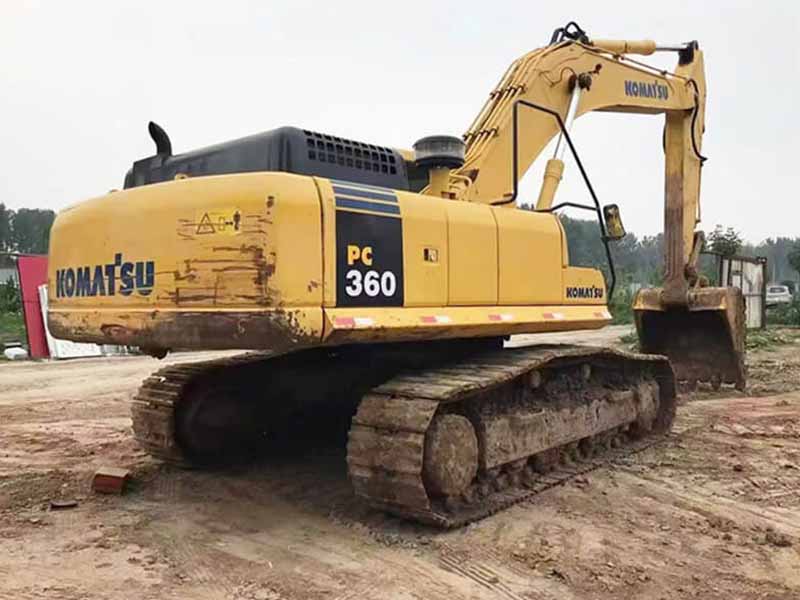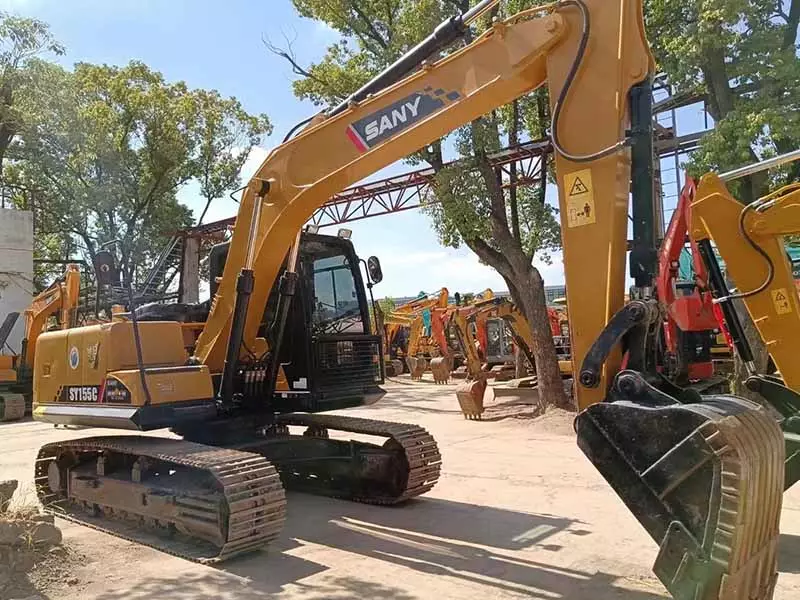
Choosing between these two machines ultimately depends on your primary duty cycle. The CAT 336 dominates extreme hard-rock stripping and high-frequency hammer work. Its 37,200 kg reinforced frame, Cat C9.3 ACERT engine at 234 kW, and heavy-duty box-section boom handle 185–195 mm hydraulic hammers without fatigue cracking. Meanwhile, the Komatsu PC360 excels at bulk-loading and fuel economy. Its rapid swing acceleration and CLSS hydraulics cut per-cycle time by 0.8 seconds, saving $9,200–10,500 in annual diesel costs. For a broader look at this machine class, explore our 30-ton excavators for sale inventory.

Technical Specification Matrix: CAT 336 vs. Komatsu PC360
Here is a side-by-side breakdown of the core specs:
| Parameter | CAT 336 | Komatsu PC360 |
|---|---|---|
| Operating Weight | 37,200 kg | 35,600 kg |
| Engine | Cat C9.3 ACERT | Komatsu SAA6D114E |
| Engine Output | 234 kW (314 hp) | 202 kW (271 hp) |
| Total Hydraulic Flow | 568 L/min | 535 L/min |
| Main Relief Pressure | 35.0 MPa | 37.3 MPa |
| Bucket Digging Force | 232 kN | 227 kN |
| Standard Bucket Capacity | 1.88–2.28 m³ | 1.6–1.9 m³ |
| Ground Pressure | 58.0 kPa | 55.4 kPa |

Engine Displacement & Low-RPM High-Torque Delivery
The Cat C9.3’s 9.3-liter displacement builds enormous low-RPM torque reserve. Consequently, it maintains pressure even during deep prying in granite or dense basalt formations. Furthermore, it sustains hydraulic output without surging under prolonged hammer loads. For a full breakdown of power curves and lift capacities, read our complete CAT 336 specs guide.
Heavy Quarry Breaker Impact vs. Dump Truck Bulk-Loading Speed
CAT 336: Heavy Counterweight & Structural Overbuilding for Hard Rock
The CAT 336’s extra 1,600 kg of operating mass acts as a natural damper. Therefore, the machine absorbs high-frequency recoil from large hydraulic hammers without rear-lifting. Moreover, its cast-steel boom pivot plates resist stress fractures during continuous granite splitting. As a result, downtime from structural fatigue drops significantly over a 10,000-hour service life. If your quarry relies heavily on breaker work, the used CAT 336 excavator in our inventory is built exactly for that environment.
Komatsu PC360: Fast Swing Acceleration & 40-Ton Hauler Production
The Komatsu PC360 uses dual-circuit CLSS closed-center hydraulics for seamless multi-function coordination. Specifically, boom-lift and swing movements combine without pressure drop or hesitation. As a result, each 90-degree swing cycle completes roughly 0.8 seconds faster than the CAT 336. Over a full shift, this speed advantage loads a 40-ton hauler 25–35 seconds faster per truck. Additionally, the 10.2 rpm swing speed maintains momentum even at high loading frequency. If bulk-loading output is your top priority, check out the used Komatsu PC360 excavator currently available.
Mining Fuel Burn Rates & Total Operating Economy
Fuel cost is a major factor in long-term mine profitability. Here is how these two machines compare in real mining conditions:
| Duty Cycle | CAT 336 | Komatsu PC360 |
|---|---|---|
| Heavy rock digging | ~29.5 L/hr | ~25.8 L/hr |
| Continuous breaker work | ~33.5 L/hr | ~29.0 L/hr |
At 2,500 annual mining hours, the Komatsu saves roughly 9,250 liters of diesel. Consequently, operators typically recover $9,200–10,500 per year in fuel expenditure alone. Furthermore, the PC360’s dual-stage air filtration and separate hydraulic oil cooling fan reduce heat-related power loss in high-dust environments. In contrast, the CAT 336 prioritizes raw output over efficiency in extreme-load scenarios.

Secondary Market Valuation & Resale Pricing
Both models hold strong residual value, yet each serves a different buyer profile.
| Machine Hours | CAT 336 | Komatsu PC360 |
|---|---|---|
| ~4,000 hrs (premium) | $92,000–108,000 | $78,000–92,000 |
| ~7,500 hrs (standard) | $68,000–88,000 | $58,000–76,000 |
| 11,000+ hrs (high-use) | $42,000–56,000 | $36,000–50,000 |
The CAT 336 commands a 10–15% brand premium at global mining auctions. Additionally, its parts ecosystem supports fast liquidation in Africa, Australia, and Latin America. The Komatsu PC360, however, offers roughly 12% lower acquisition cost at comparable hours. For a detailed breakdown of pricing trends and resale benchmarks, read our Komatsu PC360 excavator price guide.
Final Procurement Decision Checklist
Choose the CAT 336 when:
- Breaker attachment usage exceeds 35% of total working hours
- The site involves hard granite, basalt, or dense limestone formations
- You need a 2.2 m³ heavy-duty rock bucket for coarse material
- Structural fatigue resistance is a non-negotiable project requirement
Choose the Komatsu PC360 when:
- Maximizing truck-loading cycles per shift is the primary KPI
- Fuel spend represents a large share of your operating budget
- The material mix includes blasted spoil, loose rock, or mixed earth
- Operators prefer lighter, more responsive machine handling

Frequently Asked Questions
Q1: Which 36-ton excavator handles continuous rock breaker operations better?
— The CAT 336 leads in breaker endurance. Its 37,200 kg weight, heavy ballast counterweight, and reinforced box-section boom absorb the recoil of 185–195 mm hammers. Consequently, long-term structural fatigue remains minimal in demanding quarry applications.
Q2: How much fuel does the Komatsu PC360 save compared to the CAT 336?
— The Komatsu PC360 burns approximately 25.8 L/hr during heavy digging, versus 29.5 L/hr for the CAT 336. Therefore, across 2,500 annual mining hours, operators save roughly $9,200–10,500 in diesel expenditure.
Q3: Which machine delivers faster loading cycles for 30–40 ton dump trucks?
— The Komatsu PC360 completes swing cycles about 0.8 seconds faster due to its CLSS hydraulics and high swing rpm. As a result, it loads a 40-ton hauler 25–35 seconds faster per truck compared to the CAT 336.
Q4: What are the main engine output differences between these two models?
— The CAT 336 uses a 9.3-liter Cat C9.3 ACERT engine producing 234 kW (314 hp). Moreover, it delivers strong low-RPM torque for deep prying loads. In contrast, the Komatsu PC360 uses an 8.27-liter SAA6D114E engine at 202 kW (271 hp), optimized for fast throttle response and lower fuel burn.
Q5: What is the typical price difference for used 36-ton models in the secondary market?
— At mid-life condition (around 5,000–6,500 hours), a used CAT 336 typically sells for $68,000–88,000. Meanwhile, an equivalent Komatsu PC360 sells for $58,000–76,000, representing roughly a 12% lower capital acquisition cost.