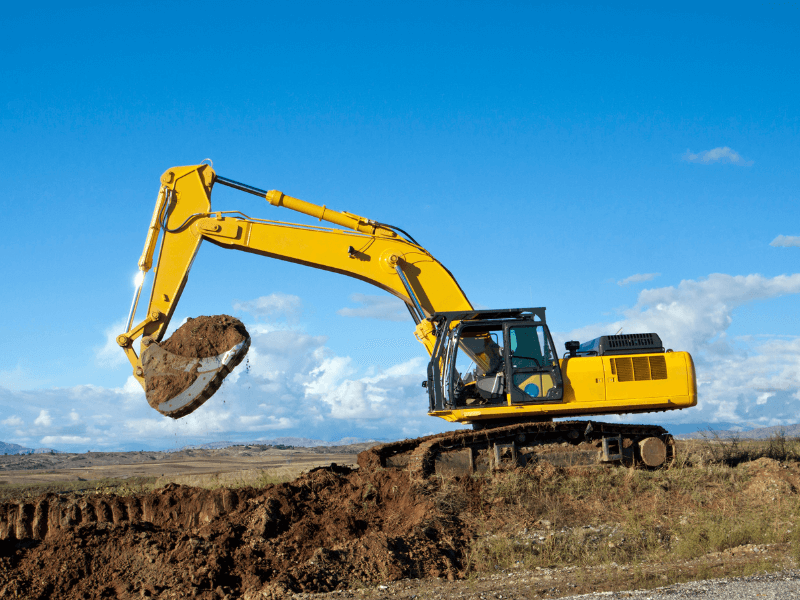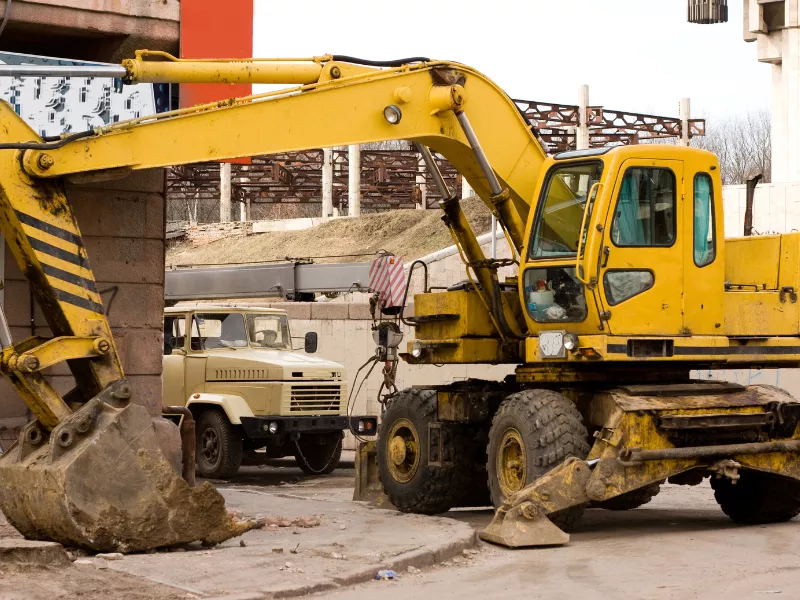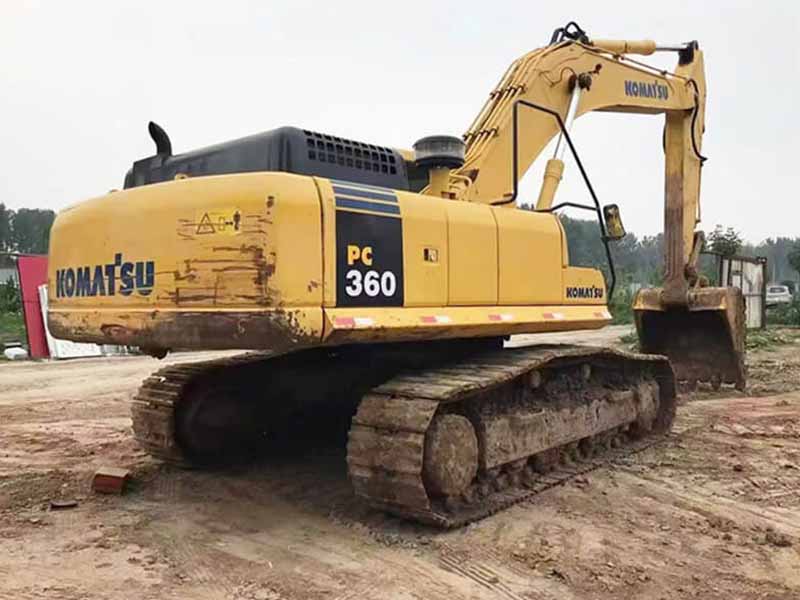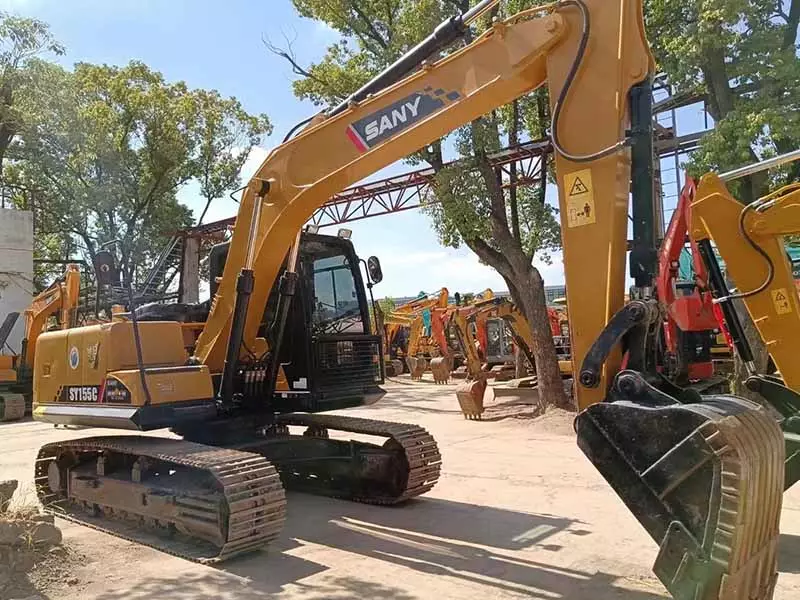
Choosing between these two machines comes down to your dominant work type. The CAT 313 wins on heavy concrete demolition. Its 13,500 kg operating weight and reinforced box-section boom absorb breaker shock without chassis bounce. The Komatsu PC130, however, wins on fuel economy and soft-ground maneuverability. At just 12,400 kg, it burns roughly 7.5 L/hr and delivers a ground pressure of only 37.0 kPa. For a broader selection of similar machines, explore our range of compact excavators for sale.

Technical Specification Matrix: CAT 313 vs. Komatsu PC130
The table below puts the key numbers side by side. Use it as your first filter.
| Specification | CAT 313 | Komatsu PC130-7/8 |
|---|---|---|
| Operating Weight | 13,500 kg | 12,400 kg |
| Engine | Cat C4.4 / 3054C | Komatsu SAA4D95LE |
| Rated Power | 74 kW | 68 kW |
| Hydraulic Flow | 254 L/min | 224 L/min |
| Main Relief Pressure | 34.3 MPa | 31.9 MPa |
| Bucket Breakout Force | 95 kN | 88 kN |
| Transport Width | 2,490 mm | 2,490 mm |
| Ground Pressure | 43.5 kPa | 37.0 kPa |
Weight Balance & Subgrade Load Impact
The CAT 313 outweighs the PC130 by roughly 1,100 kg. Consequently, that extra mass improves breaker stability on hard ground. However, it also increases the risk of sinkage on soft embankments and reservoir levees. The lighter PC130, in contrast, distributes load more gently across saturated canal beds and muddy paddy borders. For a deeper look at the PC130 chassis family, the Komatsu excavator 130 guide covers frame geometry and undercarriage ratings in full detail.
Heavy Road Demolition vs. Soft Irrigation Ditch Clearing
CAT 313: Concrete Breaker Impact Absorption & Rock Prying
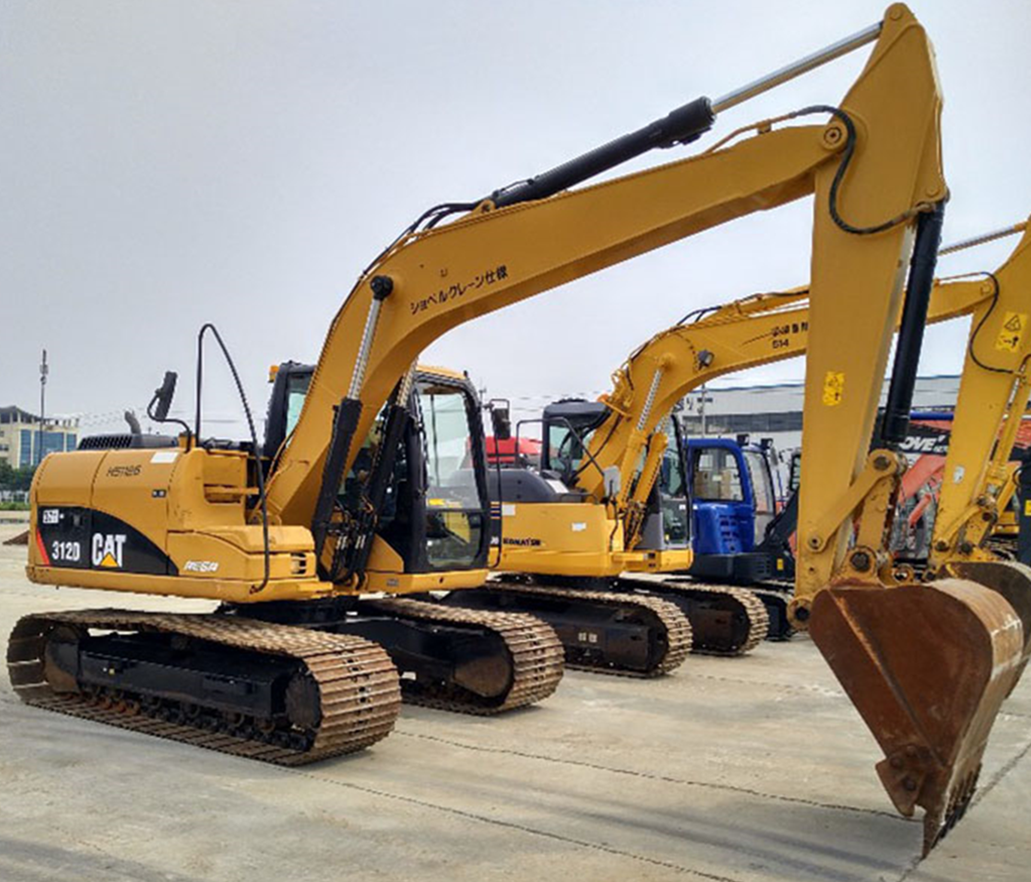
The CAT 313 handles sustained breaker work far better than most 13-ton rivals. Its thick-wall boom structure absorbs repeated hydraulic hammer blows without cracking welds or fatiguing pivot pins. Additionally, the 34.3 MPa main relief pressure supports 85–100 mm breakers with consistent chisel force. Rural contractors who demolish aged cement road surfaces or pry out weathered rock layers should strongly consider a used CAT 313C excavator. Buyers upgrading from lighter Cat models can also review the used CAT 312D excavator as a cost-efficient step-down alternative.
Komatsu PC130: CLSS Precision & Marshy Farmland Maneuverability
The PC130 runs a closed-loop load-sensing hydraulic system (CLSS). This system matches pump output precisely to operator demand. As a result, the machine delivers smooth, fine-grained movements ideal for irrigation ditch slope dressing and pipeline burial. Moreover, the low 37.0 kPa ground pressure prevents the undercarriage from punching through soft agricultural soil. Contractors working wet paddy fields or canal networks should look at a used Komatsu PC130 excavator as their primary tool.
Fuel Burn Economics & Frequent Jobsite Relocation
Fuel cost separates these two machines clearly over a full season.
- Light ditch digging: CAT 313 burns ~8.8 L/hr; PC130 burns ~7.2 L/hr.
- Continuous breaking: CAT 313 burns ~11.5 L/hr; PC130 burns ~9.6 L/hr.
Over 1,500 annual working hours, the PC130 saves contractors between 2,200and2,200 and 2,200and2,600 in diesel costs. Furthermore, the PC130’s 12,400 kg curb weight keeps combined truck-and-machine loads comfortably below the 15-ton limits common on rural bridges and culverts. The CAT 313, therefore, demands axle-load calculations before every transfer on weight-restricted routes.

Related reading: short radius vs conventional excavator guide — specs, hydraulic performance, real-world pricing and maintenance costs compared side by side.
Secondary Market Valuation & Depreciation
At roughly 5,000 operating hours, a used CAT 313 or 312D typically sells between 28,000and28,000 and 28,000and38,000. Strong demand across Latin America and Southeast Asia drives this premium. Meanwhile, an equivalent-condition Komatsu PC130-7 or PC130-8 sells between 25,000and25,000 and 25,000and34,000. The PC130 benefits from excellent parts availability across African and Asian mid-size infrastructure markets, which supports steady resale liquidity.
How to Choose?
Choose the CAT 313 when you:
- Run a breaker for more than 30% of total machine hours
- Demolish concrete rural roads or excavate fractured rock
- Already operate Cat heavy equipment and want parts commonality
Choose the Komatsu PC130 when you:
- Dig irrigation channels, drainage ditches, or farm pipeline trenches
- Transfer frequently across narrow village roads or weight-limited bridges
- Operate on soft, saturated, or muddy agricultural ground

Frequently Asked Questions
Q1: Which 13-ton excavator performs better for rural concrete road demolition? The CAT 313 is clearly superior for concrete breaking. Its heavier 13,500 kg frame and reinforced box-section boom absorb 85–100 mm breaker vibration without chassis bounce. The lighter PC130 suits only intermittent, light breaking tasks.
Q2: How much fuel does the Komatsu PC130 save versus the CAT 313? The PC130 burns roughly 7.2–7.8 L/hr, compared to 8.8–9.5 L/hr for the CAT 313. That difference saves approximately $2,200–2,600 annually over 1,500 working hours.
Q3: Can both machines cross weight-limited rural bridges on standard flatbeds? The PC130 crosses most 15-ton rural bridges safely due to its 12,400 kg curb weight. The CAT 313 requires careful axle-load monitoring before crossing restricted bridges.
Q4: Why does the PC130 sink less in agricultural mud?The PC130 generates only 37.0 kPa of ground pressure, versus 43.5 kPa for the CAT 313. Lower pressure means far less sinkage on saturated canal beds and soft paddy borders.
Q5: What is the typical price gap between used 13-ton models? At around 5,000 hours, a used CAT 313 or 312D sells for $28,000–38,000, while a comparable Komatsu PC130-7 or PC130-8 sells for $25,000–34,000.